
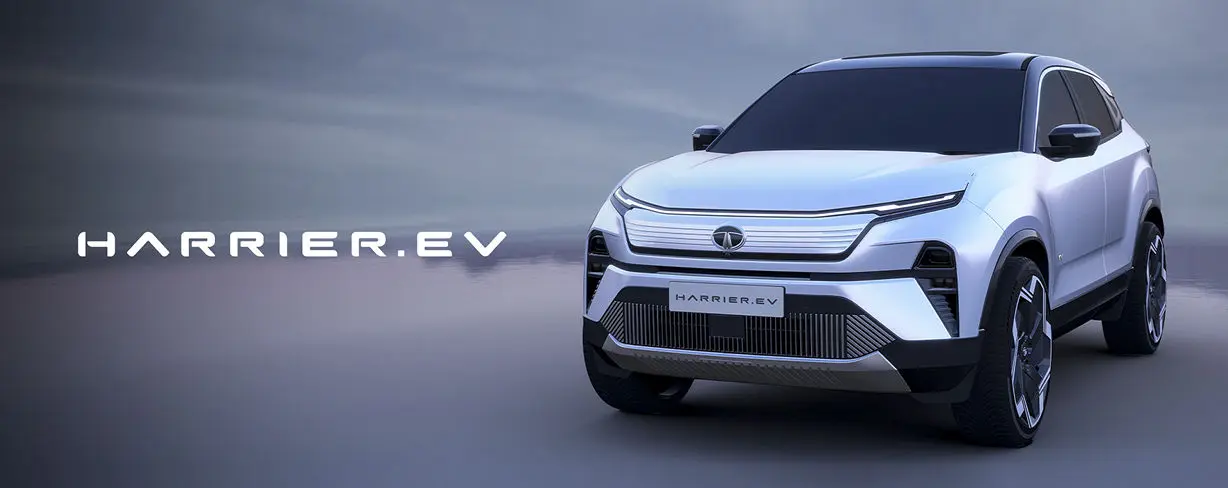
Tata Motors is gearing up to launch the much-anticipated Harrier EV on June 3, 2025 (photo source - ev.tatamotors.com)
Tata Harrier EV: India’s next big electric SUV revolution
India’s EV market is accelerating—fast. With charging networks expanding, incentives maturing, and buyers valuing quiet performance, the Tata Harrier EV arrives as a bold, premium leap from a brand that already dominates mainstream EV adoption. It promises long range, available AWD, advanced driver assistance, and a cabin that feels genuinely future-forward—without losing Tata’s well-earned reputation for practicality and value.
Launch window and positioning
The Harrier EV is positioned as a premium electric SUV that bridges daily usability with long-haul confidence. Rather than chasing spec-sheet extremes, Tata focuses on balance—usable range in real conditions, ride comfort that makes long drives pleasant, and technology that simplifies ownership. Launch activities target festive-season momentum with phased allocations in metro markets first, then broader regional availability as service and charging ecosystems scale.
Strategically, it anchors Tata’s presence above the Nexon EV and Tiago EV, giving buyers a step-up option with space, capability, and refinement. Harrier EV’s design language leans assertive yet clean; its cabin concentrates on visibility, intuitive UX, and premium materials—all tuned for a “calm and capable” experience.
Design and tech highlights
The exterior carries a planted stance, sculpted panels, and a connected light signature that reads modern without being noisy. Inside, the Harrier EV puts clarity first: controls where they belong, displays sized for legibility, and materials chosen for durability and feel. Expect refined NVH, thoughtful storage, and commanding outward visibility.
- Infotainment: Large, responsive touchscreen with connected services, voice assist, and multi-profile support.
- Driver instrumentation: Digital cluster prioritizing real-world range, energy flow, and assist states.
- ADAS behavior: Predictable interventions with calm, well-timed prompts tailored to Indian traffic.
- Comfort touches: Ventilated seats, panoramic sunroof, ambient lighting, and ergonomic switchgear.
- Updates: OTA enhancements planned for navigation, energy management, and UX refinement.
Tech should help—and then get out of the way. The Harrier EV feels designed around that idea: obvious when needed, invisible when you’re simply enjoying the drive.
Powertrain, battery, and expected performance
The Harrier EV’s brief is pragmatic: smooth torque delivery, stable chassis tuning, and thermal management suited to Indian conditions. AWD availability on select trims broadens capability for wet seasons, hills, and mixed terrain. Efficiency is optimized for the 40–80 km/h band where Indian highways and ring roads often settle; regen calibration targets natural braking feel without harshness.
- Drive feel: Linear response, confident mid-range overtakes, and composed highway stability.
- Efficiency: Real-world numbers prioritized over lab theatrics; energy management tuned for mixed cycles.
- Braking: Natural blend from regen to friction with consistent pedal feel.
- Thermals: Battery conditioning suited to high ambient temperatures and AC use.
| Specification | Detail |
|---|---|
| Architecture | Gen 2 EV platform emphasizing efficiency, safety, and packaging |
| Drivetrain | RWD on core trims; AWD available on select variants |
| Battery | High-capacity lithium-ion pack with advanced thermal management |
| Charging | Home AC compatibility; DC fast charging support |
| Estimated range | Long-range intent for urban-highway balance (variant dependent) |
| Drive modes | Eco, Normal, Sport; adjustable regen levels |
| Ride & handling | Comfort-first tune with confidence in corners and stability at speed |
Safety and ADAS
Safety goes beyond crash tests—it’s about how the vehicle helps you avoid danger first. The Harrier EV’s assist features emphasize anticipation over reaction: early alerts rather than sudden interventions, clear visual prompts over obscure icons. Combined with a robust passive safety setup, it aims for comprehensive protection.
- Airbags & body: Multi-airbags with rigid impact protection strategy.
- Cameras & sensors: 360-degree visibility with parking aids for tight urban spaces.
- ADAS focus: Adaptive cruise, lane-keep assistance, forward collision warnings, blind-spot awareness.
- Lighting & visibility: Strong LED illumination and clean sightlines reduce night-driving fatigue.
Variants, indicative pricing, and highlights
Buyers typically choose trims by feel: comfort essentials, tech extras, or full-spec assurance. The Harrier EV aims to make that choice simple with clear steps up the ladder—value, capability, then premium polish.
| Variant | Indicative ex-showroom (₹) | Drivetrain | Focus | Key highlights |
|---|---|---|---|---|
| Adventure | 21,49,000 | RWD | Core comfort | Connected infotainment, essentials-focused ADAS, practical cabin |
| Fearless | 23,00,000 (approx.) | AWD | Capability | AWD traction, richer materials, expanded convenience features |
| Empowered | 25,00,000 (approx.) | AWD | Premium | Enhanced ADAS, luxury touches, ambient lighting, panoramic sunroof |
| Stealth Edition | 26,00,000 (approx.) | AWD | Exclusivity | Matte black styling pack, distinctive accents, top interior trim |
Market response and early signals
The Harrier EV’s reception hinges on three threads: range confidence, AWD credibility, and service predictability. Urban buyers gravitate toward the cabin experience and silent torque; highway users appreciate stability and energy discipline. As deliveries scale, consistency—software cadence, parts availability, and transparent service costs—will convert interest into trust.
Public sentiment is cautiously optimistic: dealers report curiosity turning into bookings, enthusiasts scrutinize tech, and critics await formal crash ratings. A clean first year—few surprises, steady support—will set the Harrier EV’s tone for long-term success.
How it stacks up against rivals
Context matters. Buyers compare not just numbers but how an SUV feels in everyday life—traffic slogs, school runs, weekend drives, rain-soaked commutes. Here’s how Harrier EV positions itself against key segment rivals.
| Model | Price band (₹) | Range focus | Drivetrain | Key strengths | Buyer fit |
|---|---|---|---|---|---|
| Tata Harrier EV | 21–26 lakh | Long-range intent | RWD / AWD | Range + AWD + ADAS + comfort | Families wanting premium feel and confidence |
| MG ZS EV | 23–29 lakh | Daily efficiency | FWD | Comfort, mature UX, features | Comfort-first urban users |
| Hyundai Kona Electric | 24–28 lakh | Balanced efficiency | FWD | Refinement, predictable performance | Buyers valuing smoothness and reliability |
| Mahindra XUV.e8 (indicative) | 25–30 lakh | Strong highway presence | Likely AWD option | Bold design, connected tech | Tech-forward, space-seeking families |
| BYD Atto 3 | 33–35 lakh | Premium efficiency | FWD | Global tech, upscale feel | Premium-focused buyers |
Ownership experience: booking, delivery, charging
Tata leans digital-first for bookings with clear variant selection, token amounts, and delivery windows at checkout. Metro-first allocation prioritizes service-ready markets and existing EV infrastructure. Home AC charging remains the baseline for most buyers; DC fast charging compatibility covers intercity needs and quick top-ups.
- Booking: Online flow with transparent token and variant allocation.
- Delivery: Phased rollout; timelines communicated by city and trim.
- Warranty: Battery, drive unit, and vehicle coverage typically separated—review terms at booking.
- Charging: AC home charging baseline; DC fast charging support where available.
- Service: Growing network with EV-trained technicians and prioritized parts logistics.
Should you consider the Harrier EV?
If your life sits between city commutes and weekend detours, the Harrier EV’s temperament will resonate. It doesn’t chase extremes—it balances them: range vs. weight, tech vs. calm, performance vs. comfort. For families wanting a premium EV that feels reassuring on tough weeks and rewarding on good ones, this is a compelling choice.
If your priority is ultra-sport performance or luxury beyond practicality, you may look higher up the EV ladder. But if you value confidence, clarity, and consistency, Harrier EV speaks your language.
Frequently asked questions (FAQs)
1. What is the Harrier EV’s range focus?
It targets long, repeatable range numbers in mixed conditions rather than headline-only claims. Efficiency is tuned for real Indian roads.
2. Does it offer AWD?
Yes, select variants are expected to offer AWD for traction and stability, especially useful in wet seasons and hilly regions.
3. What charging solutions does it support?
Home AC charging is the baseline; DC fast charging compatibility enables quicker top-ups during intercity travel.
4. How is the ADAS tuned?
Assist features aim for calm, predictable interventions—gentle alerts, clear visuals, and sensible thresholds for Indian traffic conditions.
5. What kind of buyer is it for?
Families seeking premium feel, genuine daily comfort, and long-range confidence at competitive pricing.
Final thoughts
The Tata Harrier EV is more than a model—it’s a declaration: EVs can be aspirational and practical at once. By blending long-range intent, AWD credibility, refined ADAS, and cabin serenity, Tata has built an electric SUV that doesn’t demand compromises in everyday life. The first year will be crucial—delivery quality, software cadence, service clarity—but if Tata’s past is prologue, Harrier EV is set to become a defining choice for Indian families transitioning to electric.
The question isn’t whether EVs are coming; it’s whether they can fit your life without drama. Harrier EV’s answer is yes— quietly, confidently, and consistently.
11 thoughts on “Tata Harrier EV Set to Revolutionize India Electric SUV Market: Launch, Features & Future Prospects”